Alex Schmidt · 12 September 2026
Hazelridge's Oral History Archive Fuels School Curriculum Revisions on Local Water Systems
Local oral histories collected over decades now shape how Hazelridge schools teach students about regional water systems, and the process accelerated when district officials began integrating materials from the Hazelridge Oral History Archive into lesson plans. The archive holds hundreds of recorded interviews with longtime residents who described changes in rivers, wells, irrigation ditches, and seasonal flooding patterns across several generations. Teachers started testing revised units during the 2025-2026 school year, with full rollout scheduled for September 2026.
Building the Archive Through Community Interviews
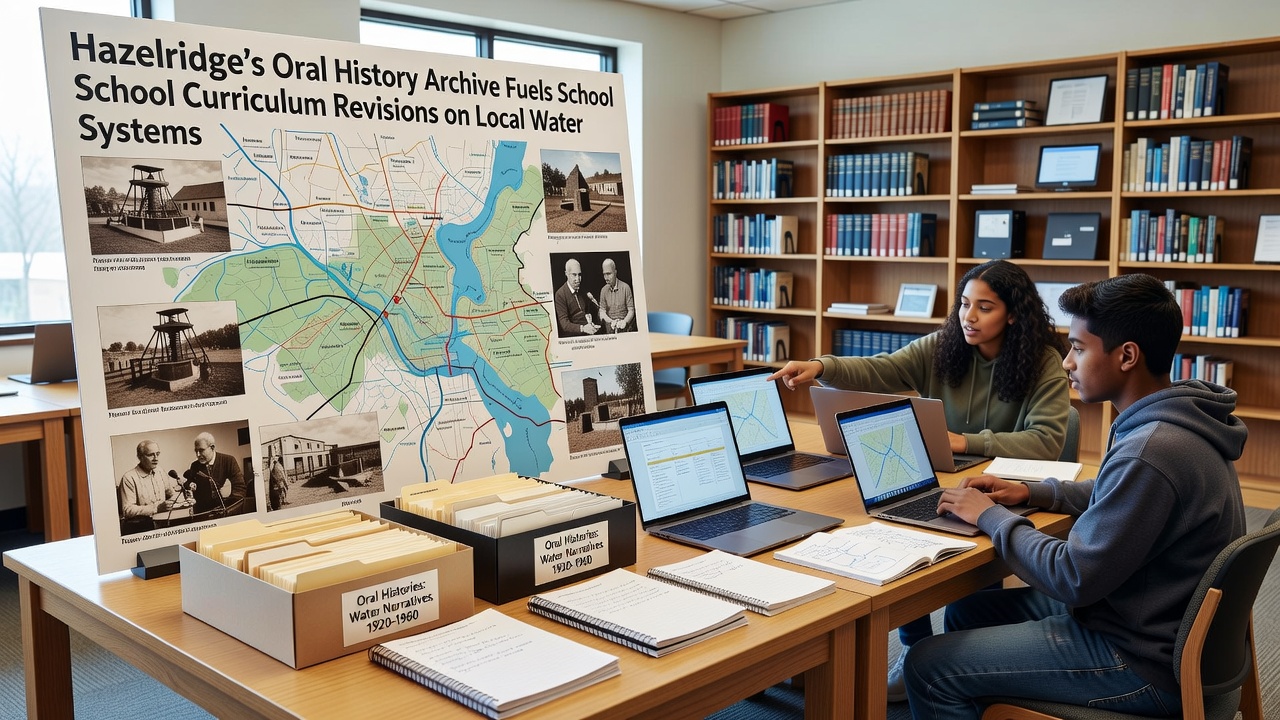
Volunteers and local historians began recording residents in the late 1990s, focusing first on farming families who relied on the Hazel Ridge creek network for irrigation. Later projects expanded to include municipal workers, Indigenous knowledge keepers, and engineers who managed reservoir releases. Each interview captured specific details such as water levels measured at particular bridges, dates when wells ran dry, and community responses to major storms. Archivists transcribed and indexed the recordings so educators could search by topic, decade, or geographic feature. The collection now exceeds 450 hours of audio plus supporting maps and photographs that show channel shifts and infrastructure upgrades over time.
How Oral Accounts Enter the Classroom
School district curriculum specialists worked with archive staff to align interview excerpts with state science and social studies standards. Students examine primary-source audio clips alongside hydrological data sets, learning to compare personal recollections with gauge readings and satellite imagery. One unit asks seventh graders to plot historical flood events mentioned in interviews against precipitation records maintained by the United States Geological Survey. Another module for high school environmental science classes uses resident descriptions of pre-development wetlands to discuss current restoration projects. Teachers report that students ask more questions about measurement methods after hearing elders describe how they once gauged stream flow with simple markers.
September 2026 Implementation Timeline
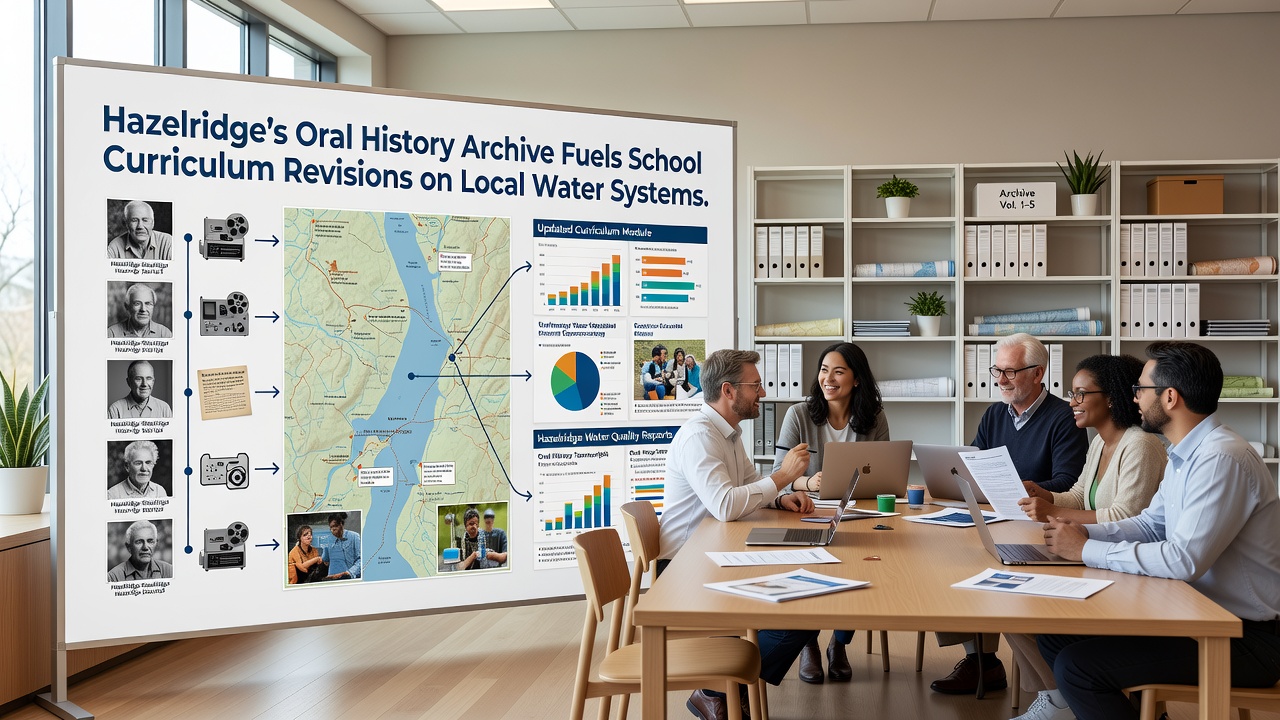
Beginning in September 2026, all middle and high school science classes will dedicate at least three instructional days to archive-derived lessons on local water systems. Elementary grades will incorporate shorter stories during social studies blocks. Professional development sessions held in spring 2026 trained teachers on handling sensitive personal accounts and verifying oral statements against physical records. District officials coordinated with the Hazelridge Public Library to create a digital portal so students can access redacted interview segments from school devices. The portal also links to external data sources including reports from Environment and Climate Change Canada on transboundary watershed management and a University of Melbourne study on community-based water monitoring programs in similar climates.
Community Involvement and Ongoing Contributions
Residents continue to add recordings to the archive, and several recent interviews describe changes observed after the 2023 drought. School groups now conduct supervised interviews with family members as part of capstone projects, adding new material each semester. Archivists review submissions for accuracy and obtain consent before adding content to the indexed collection. This feedback loop keeps the curriculum current while giving students direct experience in documentation methods used by historians and scientists. Local water utilities have supplied additional maps and flow data that complement the oral accounts, allowing comparisons between anecdotal reports and instrument readings.
Conclusion
The Hazelridge Oral History Archive supplies primary source material that educators use to revise and expand lessons on local water systems. Starting September 2026, district schools will deliver updated units that combine resident interviews with hydrological records and external data sets. The approach connects classroom instruction to documented community experiences while meeting established academic standards. Ongoing contributions from residents ensure the archive and the curriculum remain responsive to new observations about the region's water resources.