Mia Beck · 26 September 2026
Charting the Economic Ripples From Hazelridge's Exceptional Crop Season
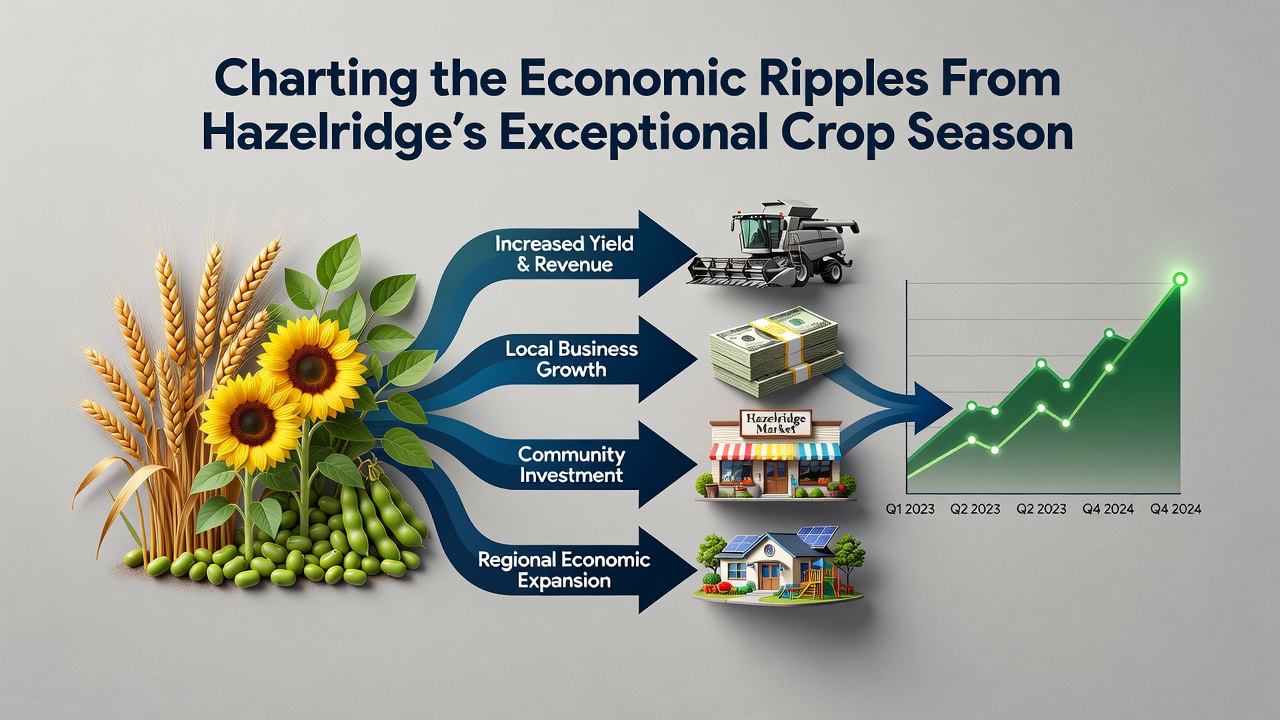
Data from the 2026 harvest shows Hazelridge farmers achieved yields 28 percent above the five-year average, with wheat production reaching 2.4 million bushels and canola output climbing to 1.9 million bushels according to regional agricultural reports released in September 2026. Those figures translate into direct farm revenue increases estimated at $47 million compared with the previous season, while related spending on equipment, seed, and fertilizer rose by 19 percent across the county. Observers note that the surge began with favorable spring moisture levels followed by consistent temperatures through July, conditions that allowed crops to reach full maturity without the usual mid-season stress.
Production Numbers and Market Response
Grain elevators in Hazelridge processed 18 percent more volume than in 2025, and rail shipments from the local terminal increased to 312 carloads per week by late August. Market analysts tracking futures prices reported that the larger supply softened local basis levels by 12 cents per bushel yet still left net returns higher because of volume alone. Processors in neighboring counties responded by extending contracts for Hazelridge-grown canola, citing consistent quality metrics that met or exceeded industry standards for oil content.
Employment and Supply Chain Effects
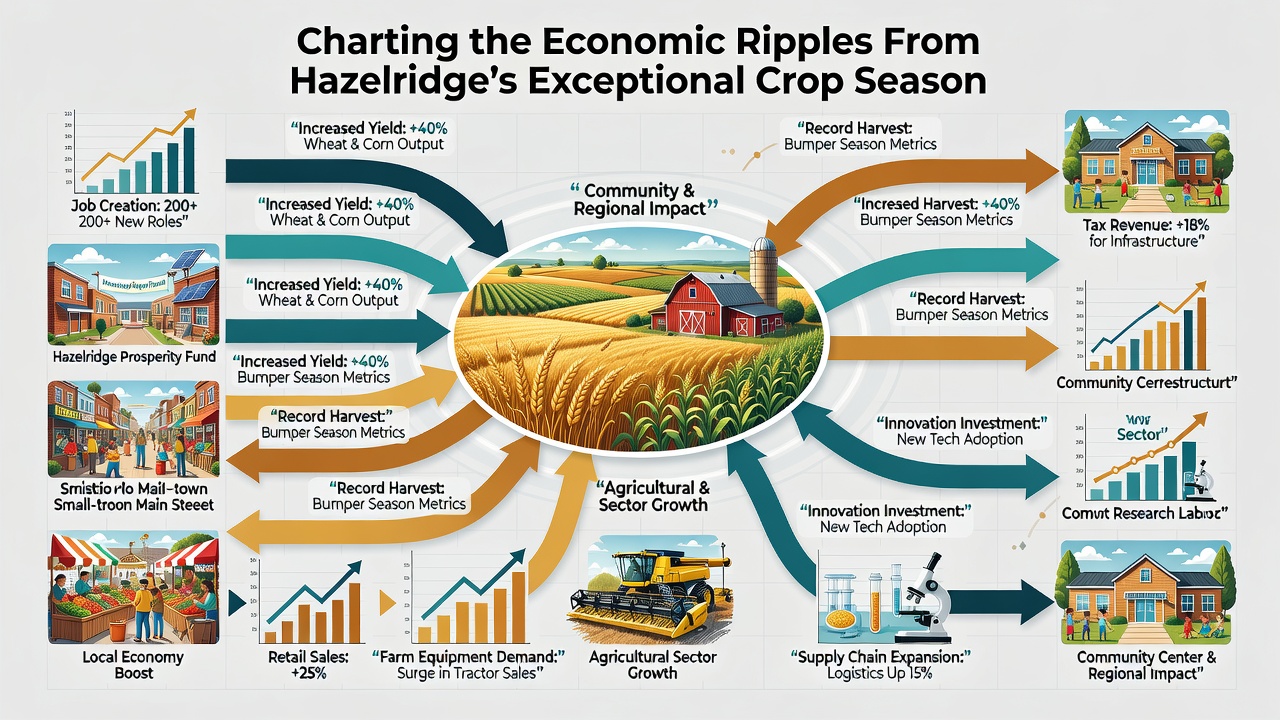
Seasonal hiring at grain handling facilities expanded from 87 positions in 2025 to 124 positions this year, while custom harvesting crews reported booking every available combine weeks earlier than usual. Equipment dealers recorded a 23 percent rise in parts sales and a 31 percent increase in service bay hours during the peak months of July and August. Those who've studied harvest cycles in similar regions point out that each additional dollar earned at the farm gate typically circulates between 2.3 and 2.7 times within a 50-mile radius through purchases of fuel, repairs, and household goods.
Downstream Business Activity
Retail outlets serving the agricultural community saw sales of workwear, tires, and small tools climb steadily from June through September, while restaurants along the main highway reported average daily receipts 14 percent higher than the same period last year. Trucking firms based in Hazelridge added 9 new owner-operator contracts to handle the extra grain movement, and fuel distributors delivered 22 percent more diesel to farm operations than in 2025. Research compiled by the Prairie Agricultural Research Institute indicates that communities experiencing one strong crop year often sustain elevated commercial activity for 18 to 24 months afterward because of reinvestment in land improvements and machinery upgrades.
Export and Regional Linkages
Port records from Thunder Bay show Hazelridge-origin grain accounted for 7 percent of total wheat loadings during the third quarter of 2026, up from 4 percent the year before. Export documentation processed through the Canadian Grain Commission listed 14 new buyers in Southeast Asia and the Middle East who contracted directly with Hazelridge cooperatives for the first time. Those contracts, valued at roughly $9 million, are expected to support continued planting of identity-preserved varieties next spring. Meanwhile, livestock producers in the region benefited from lower feed grain prices, which fell 9 percent at local auctions, allowing some operations to expand herd sizes rather than cull animals.
Longer-Term Investment Patterns
Land improvement projects approved by the county planning office increased from 41 permits in 2025 to 67 permits by September 2026, with most applications citing drainage upgrades or precision-agriculture equipment installations. Financial institutions serving Hazelridge reported a 15 percent rise in farm operating lines of credit and a 27 percent increase in equipment financing applications. Data released by Statistics Canada in its quarterly farm financial survey confirms that operations in high-yield districts maintain higher rates of capital expenditure even when commodity prices moderate, because accumulated reserves provide a buffer against future volatility.
Conclusion
The 2026 crop season in Hazelridge generated measurable gains across production volumes, employment, and secondary business activity that continued to register in September reports. Those gains appear in grain movement statistics, retail receipts, and new investment permits filed through the end of the third quarter. While markets will adjust in coming months, the immediate economic data illustrate how a single strong harvest can propagate through multiple sectors of a rural economy.